
Discover Essaouira-Mogador, a Wild Beauty ultimate Guide 2026
Discover Essaouira-Mogador, a Wild Beauty
There are places in Morocco that impress you with grand monuments, dramatic mountains, or endless desert landscapes. Then there is Essaouira-Mogador, a destination that captures your attention in a completely different way.
Facing the Atlantic Ocean, Essaouira combines wild coastal landscapes, a historic medina, white-and-blue houses, ancient fortifications, fishing boats, sandy beaches, artistic energy, and the constant rhythm of the ocean. It is a city where you can spend the morning wandering through centuries-old streets, enjoy fresh seafood for lunch, watch the waves crash against the ramparts in the afternoon, and finish the day with a spectacular Atlantic sunset.
Known historically as Mogador, Essaouira has a fascinating past as an international trading port. Its medina was inscribed on the UNESCO World Heritage List in 2001, recognizing its exceptional combination of European-influenced military architecture and traditional North African urban design.
But Essaouira is much more than its history.
It is a place to slow down, breathe the Atlantic air, explore local markets, discover Moroccan craftsmanship, enjoy water sports, taste seafood, and experience a side of Morocco that feels both authentic and refreshingly relaxed.
If you are looking for a Moroccan destination with character, culture, nature, and adventure, Essaouira-Mogador deserves a place on your itinerary.
Why Visit Essaouira-Mogador?
What makes Essaouira special is the way several different experiences come together in a relatively compact destination.
You can explore a UNESCO-listed medina, visit a working fishing port, walk along historic ramparts, relax on a long sandy beach, shop for handmade crafts, discover local cuisine, and enjoy some of Morocco's best-known wind and water activities.
The city is also famous for its atmosphere.
Unlike some of Morocco's larger tourist destinations, Essaouira often feels calmer. Its narrow streets invite you to explore without rushing, while the Atlantic breeze gives the city a distinctive character.
The official Moroccan tourism office describes Essaouira as the "Bride of the Atlantic", a fitting nickname for a city surrounded by ocean, beaches, historic walls, and a constantly changing coastal landscape.
The surrounding region adds another dimension. Argan trees, dunes, beaches, coastal ecosystems, and the Mogador Islands create a natural environment that makes Essaouira particularly appealing to travelers who want more than sightseeing.
The Story Behind Mogador
Before becoming known internationally as Essaouira, the city was widely associated with the name Mogador.
Its modern historic identity was established in the 18th century when Sultan Sidi Mohamed Ben Abdallah sought to develop the Atlantic settlement into an important royal port and commercial center. According to UNESCO, the city subsequently became a major trading connection between Morocco, sub-Saharan Africa, Europe, and other parts of the world.
This international role helped shape the city's multicultural character.
A walk through the historic center reveals influences that reflect the city's long relationship with different cultures and communities. UNESCO notes the coexistence of Amazigh, Arab, African, European, Muslim, Christian, and Jewish communities in Essaouira's history.
The result is a city that feels distinctly Moroccan while also displaying architectural and cultural influences from beyond Morocco.
That mixture is one of the reasons Essaouira history remains such an interesting part of a visit.
Explore the UNESCO Medina of Essaouira
The Medina of Essaouira is undoubtedly one of the city's biggest attractions.
Inscribed as a UNESCO World Heritage Site in 2001, the medina is recognized as an outstanding example of an 18th-century fortified seaport influenced by European military architecture while remaining firmly rooted in a North African context.
Walking through the medina is an experience in itself.
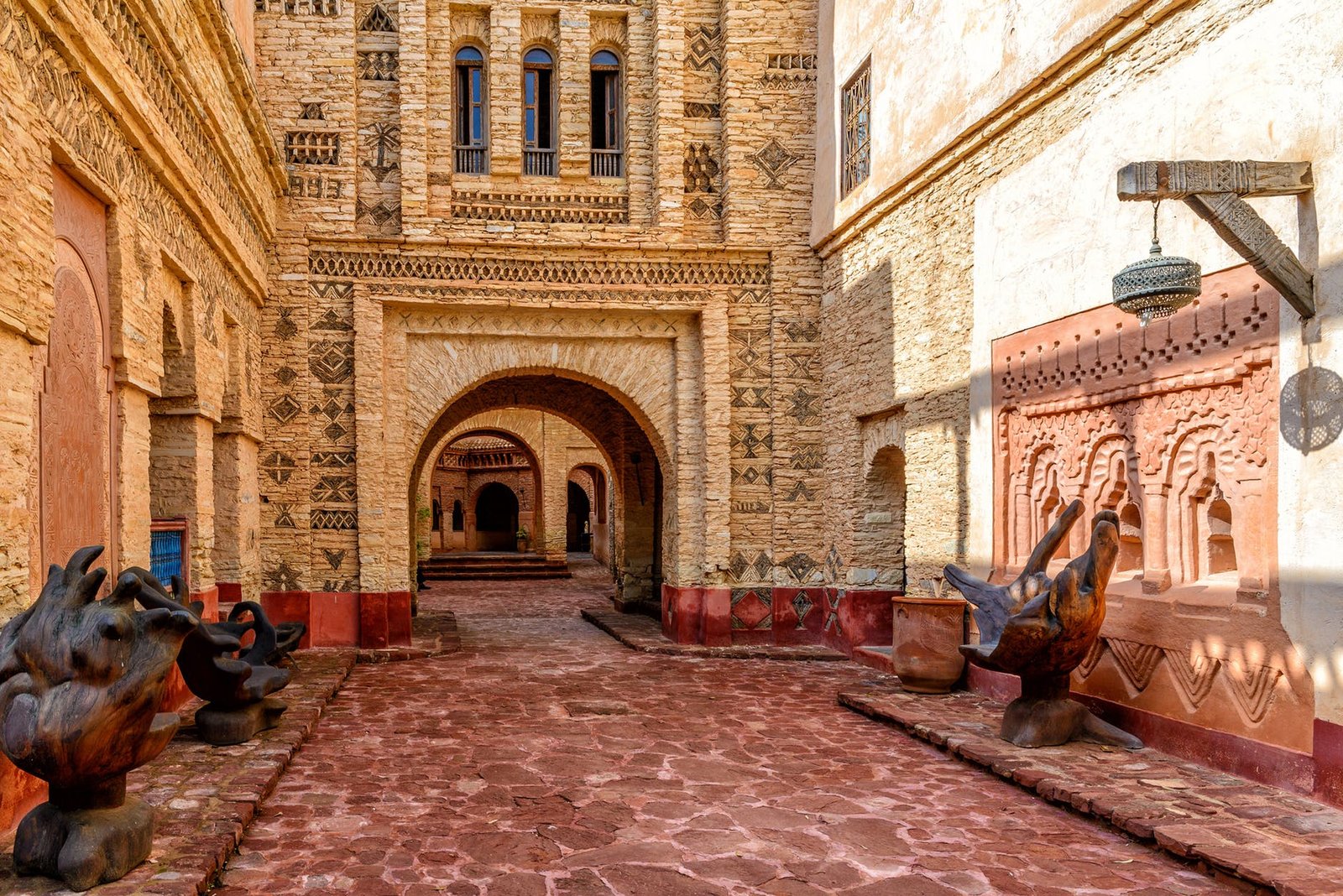
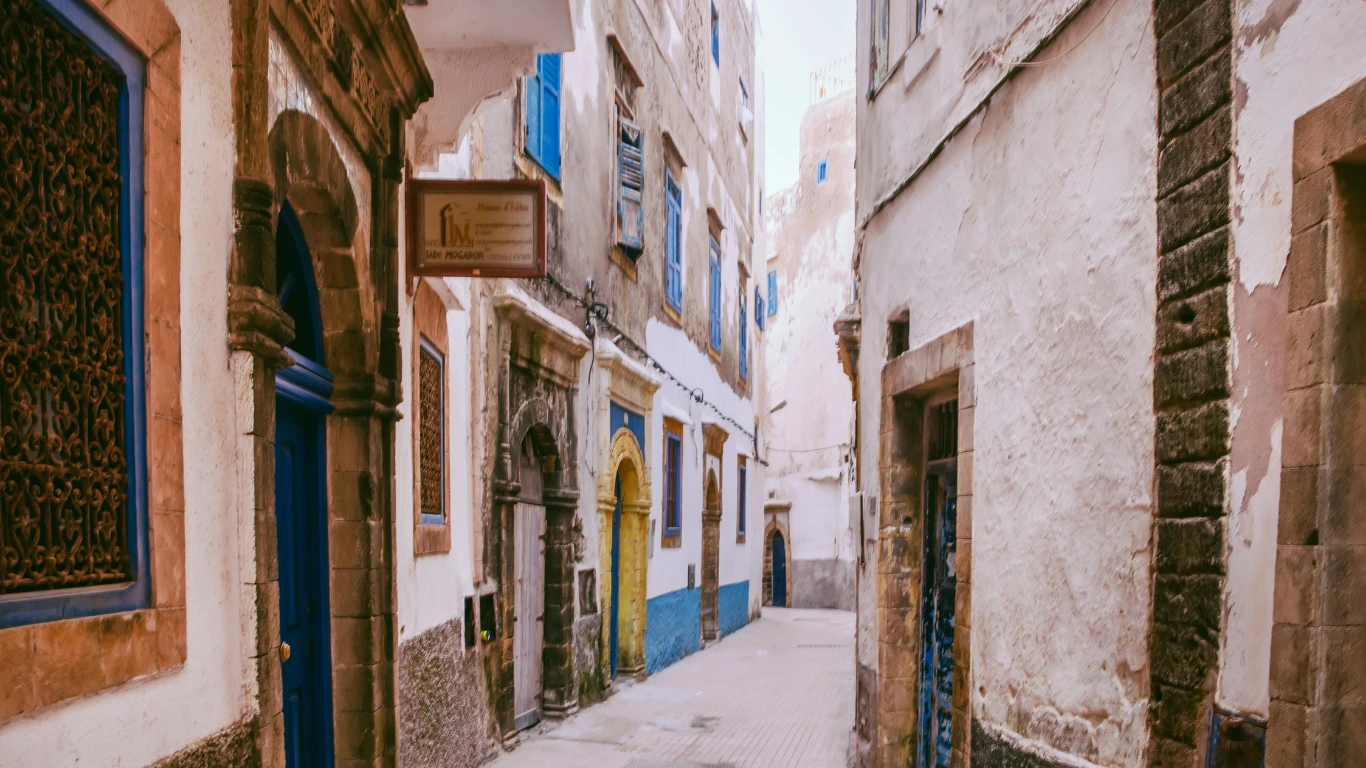
Rather than following a strict sightseeing checklist, allow yourself to wander. You will encounter narrow lanes, traditional doors, small shops, cafés, galleries, artisan workshops, and hidden corners that reveal different aspects of Essaouira's personality.
The city walls are particularly impressive.
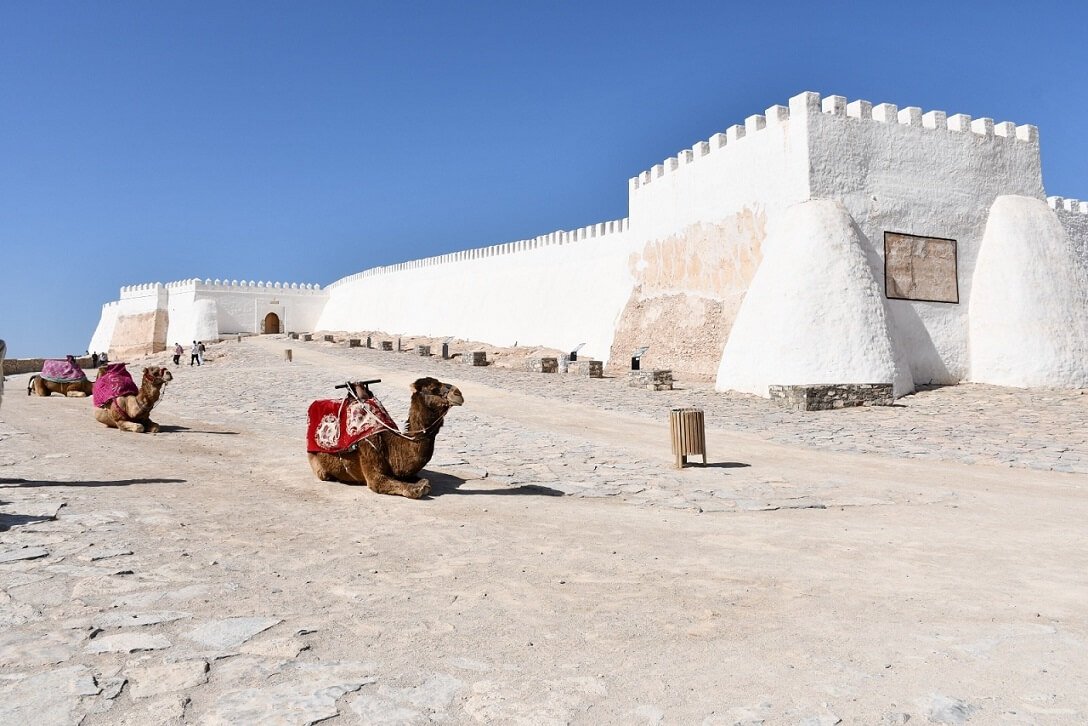
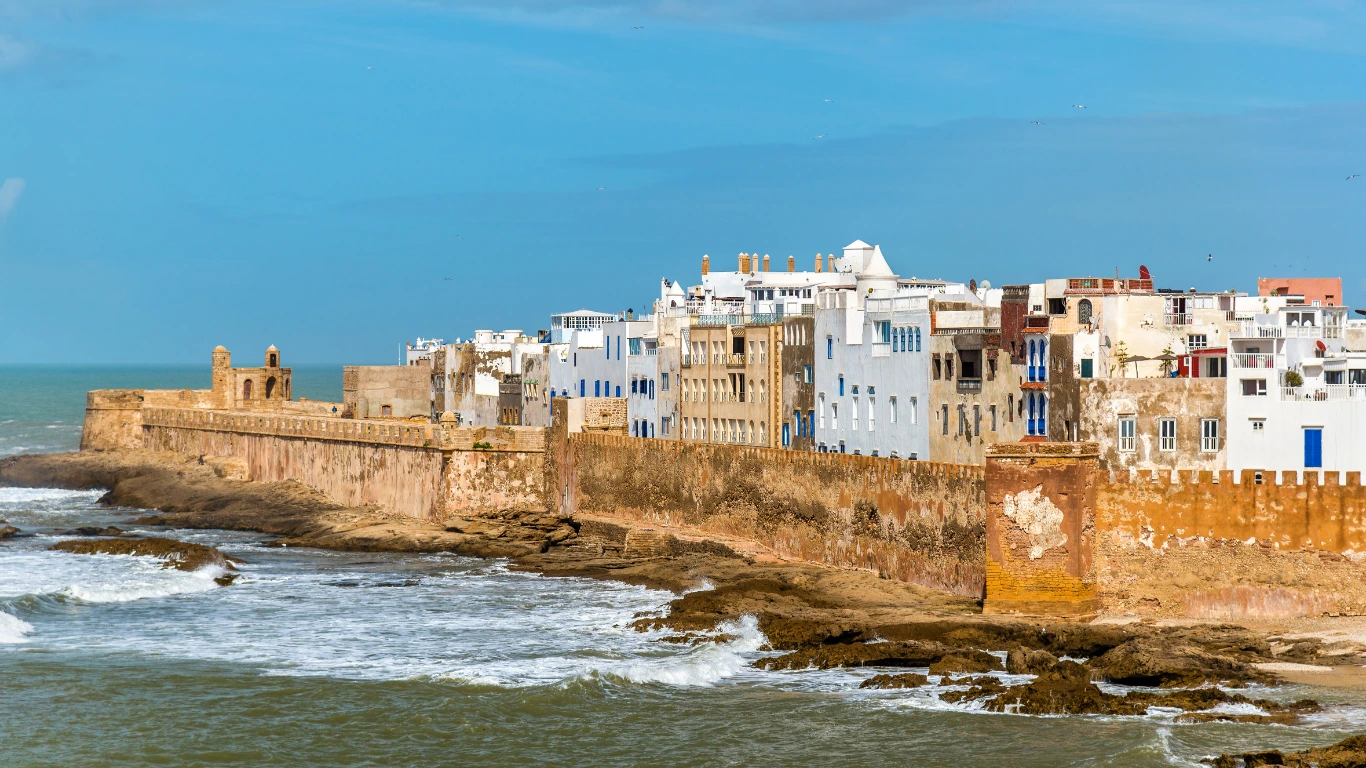
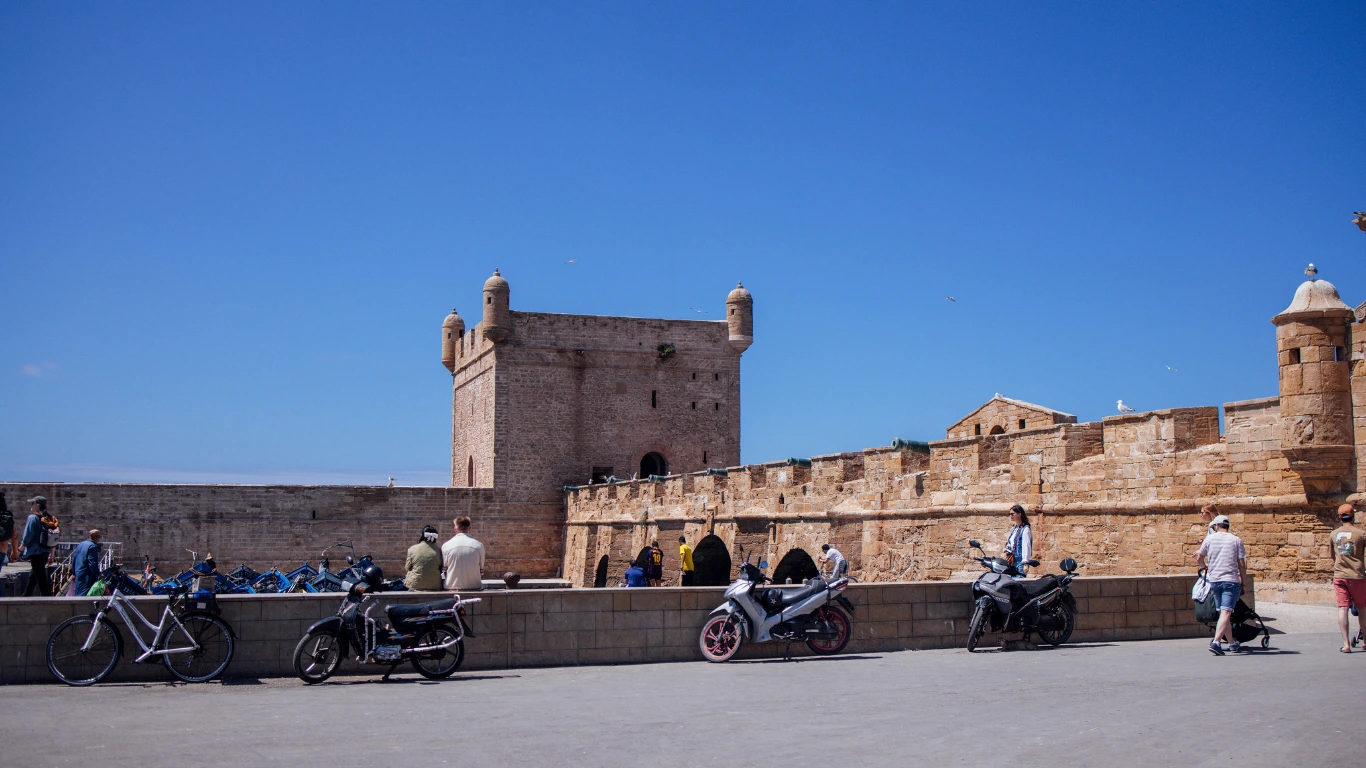
The fortifications include the Skala of the Kasbah and the Skala of the Port, two defensive structures that provide some of the most memorable views over the Atlantic. The Moroccan National Tourist Office highlights these ramparts and fortified areas as important parts of Essaouira's historic character.
Take your time here.
Listen to the sound of the waves below the walls, watch seabirds moving above the ocean, and look back toward the white buildings of the medina.
This is where the wild beauty of Essaouira becomes especially apparent.
Walk Along the Skala of the Kasbah
For many visitors, the Skala of the Kasbah is one of the most atmospheric places in Essaouira.
The old defensive wall faces the Atlantic and features historic cannons that once protected the city. Today, the Skala provides a dramatic place to appreciate the relationship between Essaouira and the ocean.
The stone walls, blue sky, Atlantic waves, and old cannons create an unmistakable Moroccan coastal scene.
It is also a fantastic location for photography.
Come early if you want a quieter experience, or visit later in the day when the changing light creates beautiful contrasts across the old walls.
The location has also attracted international attention through film and television. Morocco's tourism office notes that Essaouira's ramparts were used to represent Astapor in Game of Thrones.
Even if you are not interested in filming locations, the Skala remains worth visiting for its architecture and ocean views.
Discover the Fishing Port of Essaouira
The historic port is another essential stop.
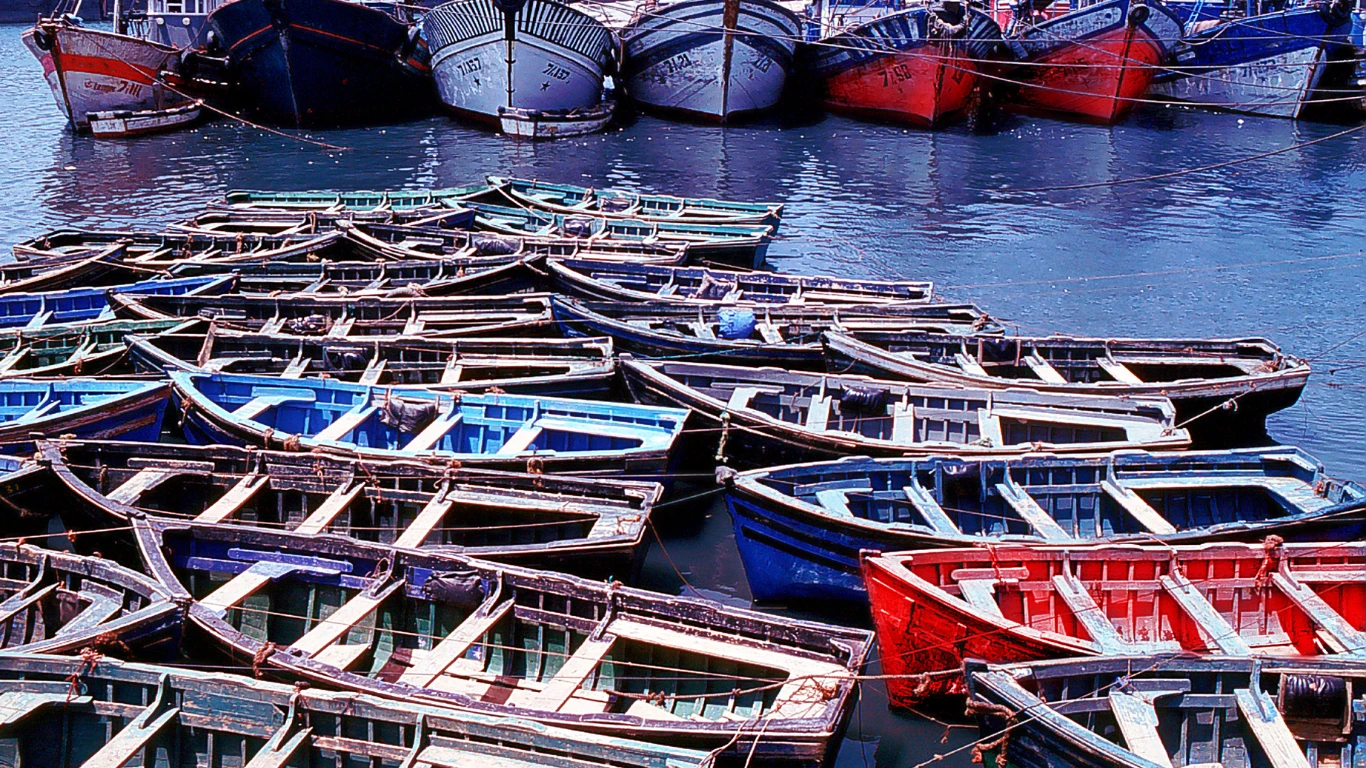
Essaouira has been connected to maritime trade for centuries, and the harbor continues to be an important part of everyday life in the city.
Instead of seeing the port simply as a tourist attraction, take a moment to observe its activity.
Fishing boats return from the Atlantic, fishermen work around the harbor, and seafood makes its way toward local markets and restaurants.
The port is particularly lively during the day.
For travelers interested in local food in Essaouira, this is also one of the places where you can appreciate the connection between the ocean and the city's cuisine.
Fresh fish and seafood are central to the experience.
You can choose from different seafood options and enjoy a meal while experiencing one of the most authentic flavors of this Atlantic city.
Taste Fresh Seafood in Essaouira
A visit to Essaouira would not be complete without trying its seafood.
The city's location on the Atlantic means that fish and seafood have long played an important role in local life.
At the port and in restaurants around the medina, travelers can find dishes featuring freshly caught fish, grilled seafood, shellfish, and other coastal specialties.
For the best experience, don't simply look for the most luxurious restaurant.
Sometimes a simple meal prepared with fresh ingredients is exactly what you want after spending hours exploring the city.
Pair your meal with Moroccan bread, salads, seasonal vegetables, or traditional Moroccan tea, and you have an uncomplicated but memorable travel experience.
Food is one of the easiest ways to connect with a destination, and in Essaouira, the connection between Atlantic fishing culture and Moroccan cuisine is particularly strong.
Experience the Beaches of Essaouira
Essaouira is not only about historic buildings.
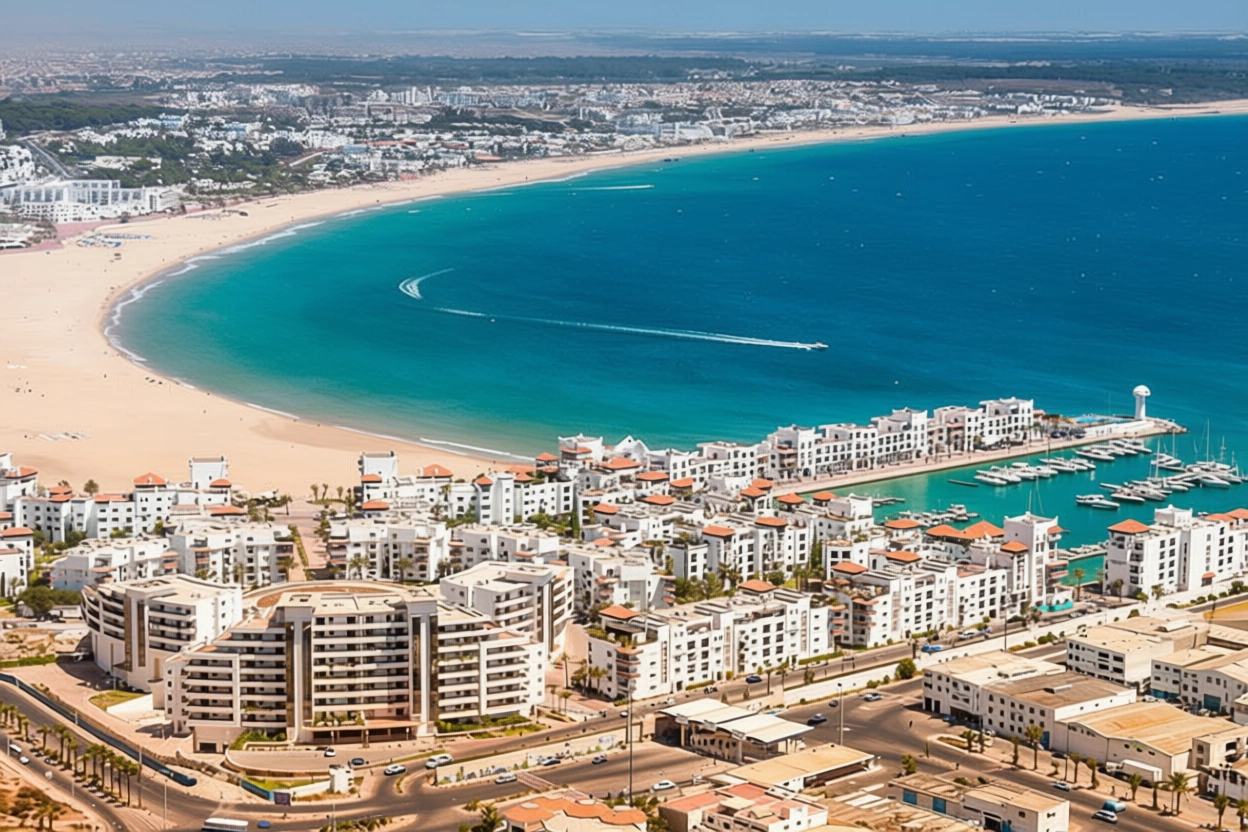
The city also has a long sandy beach where travelers can walk, relax, enjoy the ocean views, or simply escape the narrow streets of the medina for a while.
The Atlantic atmosphere is part of what makes the beach different from many traditional resort destinations.
The wind is often noticeable, which contributes to Essaouira's reputation as a destination for surfing, windsurfing, and kitesurfing. Morocco's official tourism office specifically highlights these water sports and the city's strong coastal winds.
If you prefer a slower experience, simply walking along the beach can be enough.
The coastline stretches away from the historic center, offering plenty of space to enjoy the scenery.
Nearby beaches and coastal areas, including Sidi Kaouki, Chicht, Azrou, and Tafedna, provide additional opportunities for travelers who want to explore beyond Essaouira itself.
Why Essaouira Is Famous for Water Sports
There is a reason Essaouira is sometimes associated with the nickname the Wind City.
The Atlantic winds create excellent conditions for activities such as kitesurfing and windsurfing. For experienced riders, the conditions can be exciting. For beginners, local schools and instructors can provide lessons and equipment.
You don't need to be an expert athlete to enjoy Essaouira's relationship with the ocean.
Even if you never enter the water, watching surfers and kiteboarders move across the waves can be an entertaining part of a beach day.
For adventure travelers, however, the combination of Atlantic waves, consistent wind, wide beaches, and Moroccan scenery makes Essaouira particularly attractive.
If water sports are one of your priorities, consider allowing more than a few hours for the experience.
Discover the Mogador Islands
Just offshore from Essaouira are the Mogador Islands, an important natural element of the destination.
The islands form part of the broader coastal environment and are associated with protected bird habitats. Morocco's tourism office notes that the islands provide a refuge for birds including Eleonora's falcons and seagulls.
UNESCO also considers the Mogador Archipelago an important component associated with the cultural and natural significance of the Essaouira World Heritage property.
From the city's ramparts, you can appreciate the islands from a distance.
Their presence adds to the wild character of the coastline. Instead of an urban waterfront completely dominated by buildings and modern development, Essaouira retains a strong connection with the natural Atlantic environment.
This combination of heritage and nature is one of the destination's greatest strengths.
Explore the Argan Country Around Essaouira
The countryside surrounding Essaouira is strongly associated with the argan tree, one of Morocco's most recognizable trees.
Argan forests are an important feature of the region, and argan products are deeply connected with local culture and rural livelihoods.
Visitors may encounter cooperatives producing argan oil, cosmetics, food products, and other traditional goods.
A visit to an argan cooperative can be an interesting addition to an Essaouira itinerary, especially if you want to understand how local products are made rather than simply buying a bottle from a shop.
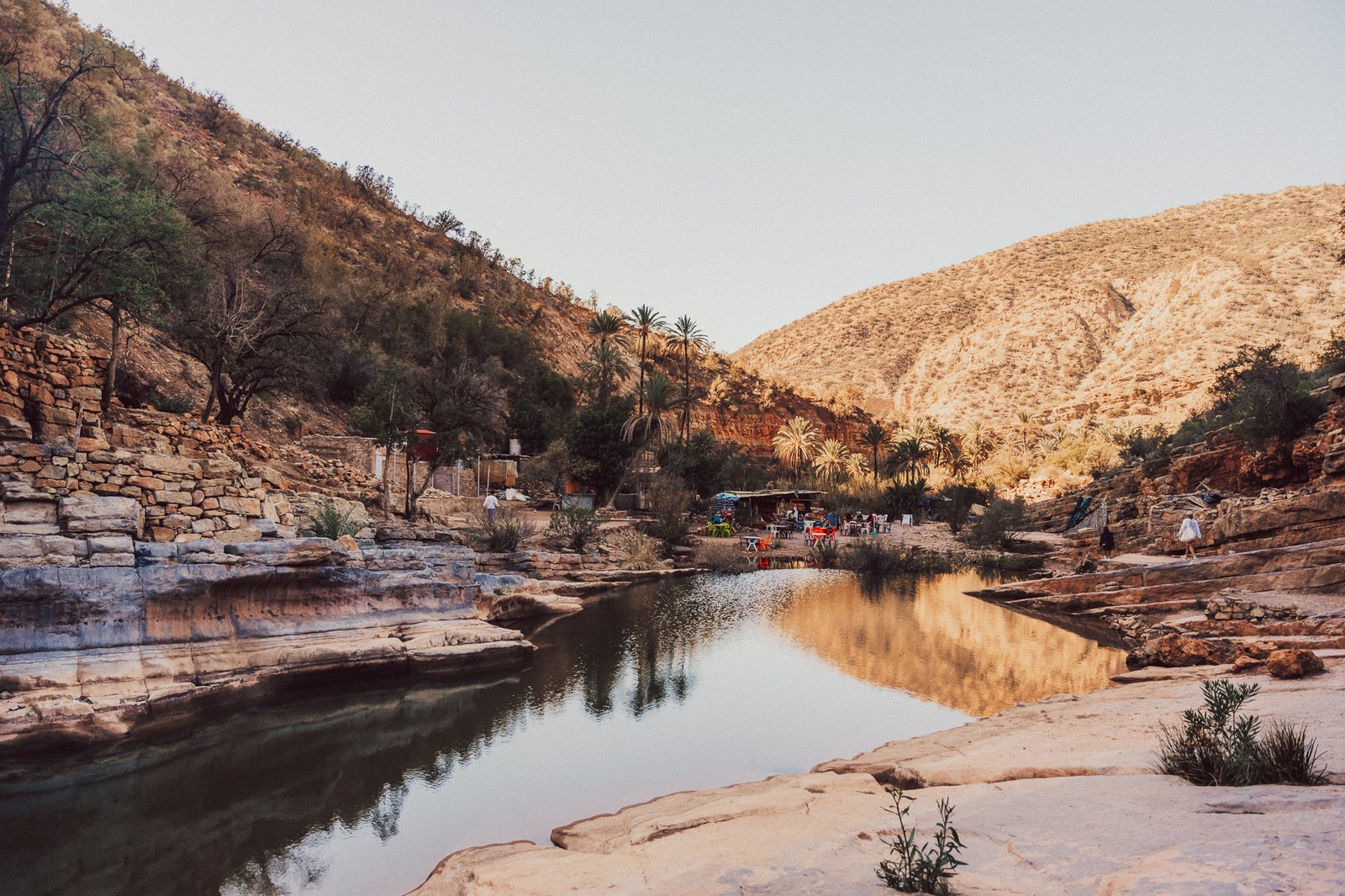
The natural environment around Essaouira is diverse, combining forests, dunes, lakes, ocean, and wild coastline. The official tourism office describes the province as one of Morocco's more wooded areas and highlights efforts toward responsible tourism and protection of the local ecosystem.
For travelers interested in nature, this gives you another reason to explore beyond the medina.
Experience the Artistic Side of Essaouira
Essaouira has long attracted artists, musicians, photographers, designers, and travelers looking for inspiration.
The atmosphere of the city naturally lends itself to creativity.
Whitewashed walls, colorful doors, handmade crafts, old wooden architecture, Atlantic light, traditional markets, and narrow streets provide endless visual inspiration.
Inside the medina, you will find galleries, craft shops, workshops, and places connected with local artistic traditions.
The Moroccan National Tourist Office describes Essaouira as a city of art and history, highlighting its galleries and cultural spaces.
This artistic atmosphere is not limited to galleries.
You can see it in the crafts sold in small shops, the music heard around the city, the decoration of cafés, and the way local artisans preserve traditional skills.
If you enjoy shopping for authentic souvenirs, Essaouira is a particularly rewarding destination.
Experience Gnawa Music and Essaouira's Cultural Energy
Music is an important part of Essaouira's identity.
The city is strongly associated with Gnawa music, a musical tradition with deep African and Moroccan roots.
The annual Gnaoua Festival has helped reinforce Essaouira's reputation as an international destination for music and culture. Morocco's official tourism office identifies the festival as one of the city's major cultural experiences.
Even outside major festival periods, music remains part of the city's atmosphere.
Travelers interested in Moroccan culture can explore local performances, cultural venues, and music connected with the traditions of the region.
Gnawa music is more than entertainment. It represents part of the cultural history that makes Essaouira different from many other Moroccan destinations.
Shop for Traditional Moroccan Crafts
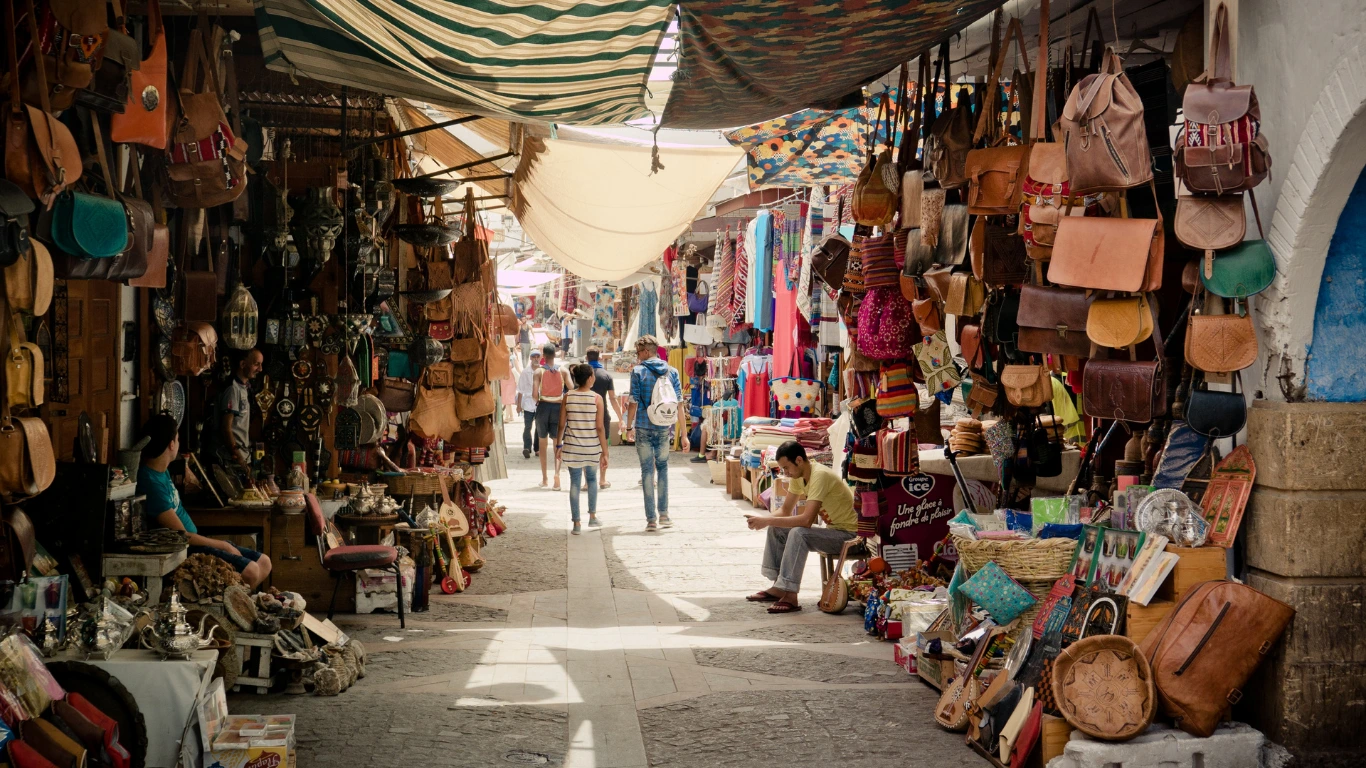
Shopping in Essaouira is less about large shopping centers and more about discovering individual artisans and traditional products.
Inside the medina, you can browse shops selling:
-
Handmade wooden products
-
Moroccan textiles
-
Jewelry
-
Decorative objects
-
Leather goods
-
Local artwork
-
Argan oil products
-
Traditional souvenirs
Take your time when shopping.
One of the pleasures of the Essaouira medina is discovering products while walking through the streets rather than entering the city with a strict shopping list.
If you find something interesting, ask about how it was made.
You may discover that the object is produced locally or that it reflects a traditional Moroccan craft.
This makes your souvenir more meaningful because you take home not only an object but also part of the story behind it.
What Makes Essaouira Different From Marrakech?
Travelers often combine Marrakech and Essaouira because the two destinations offer very different experiences.
Marrakech is famous for its energetic souks, historic palaces, gardens, busy squares, and intense urban atmosphere.
Essaouira is slower.
The Atlantic breeze, smaller historic center, fishing port, beaches, and coastal atmosphere create a different rhythm.
If Marrakech feels like a city that constantly asks you to explore, Essaouira often feels like a city inviting you to pause.
That doesn't mean Essaouira lacks things to do.
You can spend your time walking the medina, visiting the Skala, exploring the port, trying seafood, relaxing on the beach, taking a surf lesson, shopping, visiting cultural spaces, or exploring the surrounding countryside.
The difference is the atmosphere.
For many travelers, Essaouira is the place to slow down during a Morocco itinerary.
The Best Things to Do in Essaouira
If you only have limited time, focus on the experiences that best represent the city's character.
Here are some of the best things to do in Essaouira:
-
Explore the UNESCO-listed medina
-
Walk along the Skala of the Kasbah
-
Visit the historic Essaouira port
-
Try fresh Atlantic seafood
-
Walk along Essaouira Beach
-
Watch surfers and kitesurfers
-
Shop for traditional Moroccan crafts
-
Discover local art galleries
-
Learn about Gnawa culture and music
-
Explore the surrounding argan landscapes
-
Visit nearby beaches such as Sidi Kaouki
-
Watch the sunset over the Atlantic
The beauty of Essaouira is that many of these experiences can be combined naturally in one day.
You don't always need a complicated itinerary.
Sometimes the best plan is simply to walk.
A Perfect Day in Essaouira
Imagine starting your morning with breakfast near the medina.
After your coffee or Moroccan tea, walk through the quiet streets before the city becomes busier.
Head toward the ramparts and spend some time looking across the Atlantic.
Continue toward the port and watch the fishing activity before stopping for a fresh seafood lunch.
In the afternoon, return to the medina.
Explore craft shops, art galleries, small cafés, and traditional streets.
Later, head toward the beach.
The Atlantic breeze becomes part of the experience as you watch surfers, walk along the sand, or simply sit and enjoy the ocean.
As the day comes to an end, return toward the ramparts and watch the changing colors of the sky.
This is the kind of day that explains why people fall in love with Essaouira-Mogador.
It is not about rushing from one attraction to another.
It is about experiencing the city.
When Is the Best Time to Visit Essaouira?
Essaouira can be visited throughout much of the year, but your ideal travel period depends on what you want to do.
If you want to explore the medina, enjoy the beach, take photographs, and discover the city on foot, choose a period with comfortable weather for walking.
If your priority is kitesurfing or windsurfing, the wind becomes an important consideration.
Summer can be particularly attractive for visitors who enjoy coastal activities, although the strong Atlantic breeze is part of the city's identity throughout the year.
For travelers who prefer a quieter atmosphere, consider avoiding the busiest periods and spending several days rather than making a very short stop.
Essaouira is a destination where having time to wander can make the experience much better.
How Many Days Do You Need in Essaouira?
You can see the highlights of Essaouira in one day, but two or three days can give you a much more relaxed experience.
A one-day visit can cover the medina, Skala, port, seafood lunch, beach, and sunset.
With two days, you can slow down and add shopping, cultural experiences, a longer beach visit, or a water-sport activity.
With three days or more, consider exploring the surrounding region, including nearby beaches and countryside.
The right amount of time ultimately depends on your travel style.
If you enjoy slow travel, photography, food, surfing, culture, or simply relaxing near the ocean, you may find yourself wanting to stay longer than expected.
Essaouira for Nature Lovers
The phrase "wild beauty" is particularly appropriate for Essaouira because the destination has maintained a strong connection with its natural environment.
The Atlantic Ocean dominates the landscape.
Beyond the city, the region includes sandy beaches, dunes, argan forests, and coastal ecosystems.
The Mogador Islands provide another important natural feature, while nearby beaches offer opportunities for walking, swimming, camel trekking, and water sports depending on local conditions.
For nature lovers, Essaouira offers something different from Morocco's famous desert destinations.
Here, the landscape is shaped by wind, ocean, sand, birds, forests, and rugged coastline.
It is a softer but equally powerful form of Moroccan wilderness.
Responsible Travel in Essaouira
The beauty of Essaouira is also a responsibility.
The historic medina, natural coastline, dunes, beaches, wildlife, and local communities all need protection.
When visiting, choose local businesses where possible, respect historic buildings, avoid leaving waste on beaches, and be considerate when photographing local people.
If you visit an argan cooperative, artisan workshop, or local restaurant, remember that these businesses are part of the community that gives Essaouira its character.
Responsible tourism is not about making your trip complicated.
It is simply about traveling in a way that helps preserve the destination for future visitors and, more importantly, supports the people who live there.
Morocco's tourism authorities have also highlighted responsible tourism and environmental protection in the Essaouira region.
Why Essaouira-Mogador Should Be on Your Morocco Itinerary
There are countless reasons to visit Morocco.
You can explore the imperial cities, cross the Atlas Mountains, sleep in a desert camp, visit ancient kasbahs, or relax on the Atlantic coast.
But Essaouira offers a combination that is difficult to replicate.
It brings together history, ocean, architecture, food, music, art, nature, and adventure.
Its UNESCO-listed medina tells the story of an important international trading port.
Its ramparts reveal a dramatic Atlantic landscape.
Its fishing port connects the city with the ocean.
Its beaches invite you to slow down.
Its winds attract water-sports enthusiasts.
Its artistic atmosphere encourages exploration.
And its surrounding landscapes reveal another side of Morocco beyond the major cities.
Perhaps most importantly, Essaouira doesn't feel like a destination you simply visit.
It feels like a destination you experience.
Final Thoughts: Discover the Wild Beauty of Essaouira-Mogador
Essaouira-Mogador is one of Morocco's most distinctive coastal destinations, combining the charm of a historic medina with the raw beauty of the Atlantic Ocean.
From the ancient walls of the UNESCO-listed medina to the fishing port, from the white-and-blue streets to the sandy beaches, every part of the city tells a different story. UNESCO recognizes Essaouira as an exceptional example of a fortified 18th-century seaport where European architectural influences were adapted to a North African setting.
But statistics and heritage classifications only tell part of the story.
To understand Essaouira, you need to walk its streets, listen to the waves, taste its seafood, feel the Atlantic wind, watch the fishing boats, discover its crafts, and experience the relaxed rhythm of life inside the old city.
That is the real attraction of Essaouira-Mogador.
It is historic without feeling frozen in time, artistic without losing its authenticity, adventurous without being overwhelming, and peaceful while still offering plenty to discover.
If you are planning a trip through Morocco and want to experience a destination where culture meets nature and the Atlantic meets history, make time for Essaouira.
Come for the medina.
Stay for the ocean.
And leave with the memory of a truly wild Moroccan beauty.

AGADIR TRIP GUIDE
Related content
Interdum et malesuada fames