Is Agadir Sandboarding Worth It? The Honest Guide (2026)
Is Agadir Sandboarding Worth It? The Honest Guide
A real verdict, honest comparisons, and who this actually suits — not just another sales pitch
Yes, generally — Agadir sandboarding is worth it for most travelers, provided you go in with the right expectations. These are coastal Atlantic dunes near Tamri, not the towering erg walls of Merzouga's true Sahara — a genuinely different, more accessible experience, not a lesser one. It's low-risk, needs no experience, costs roughly €20-40 for a shared half-day tour, and suits nearly everyone except those with significant mobility limitations. The honest caveat: which operator you pick matters more than whether to do it at all.
- The Honest Verdict
- Agadir Dunes vs. the Real Sahara (Merzouga)
- What a Typical Day Actually Looks Like
- Technique Basics: Standing vs. Sitting
- Morning vs. Sunset: Which Timing to Choose
- Best Season: A Month-by-Month Look
- Who This Actually Suits
- Sandboarding vs. Quad Biking: Which First
- What It Costs and What's Included
- Is It Safe? What Could Go Wrong
- Common First-Timer Mistakes
- What to Actually Pack
- Independent Guides vs. Pre-Booked Tours
- A Note on Responsible Tourism
- FAQ
The Honest Verdict
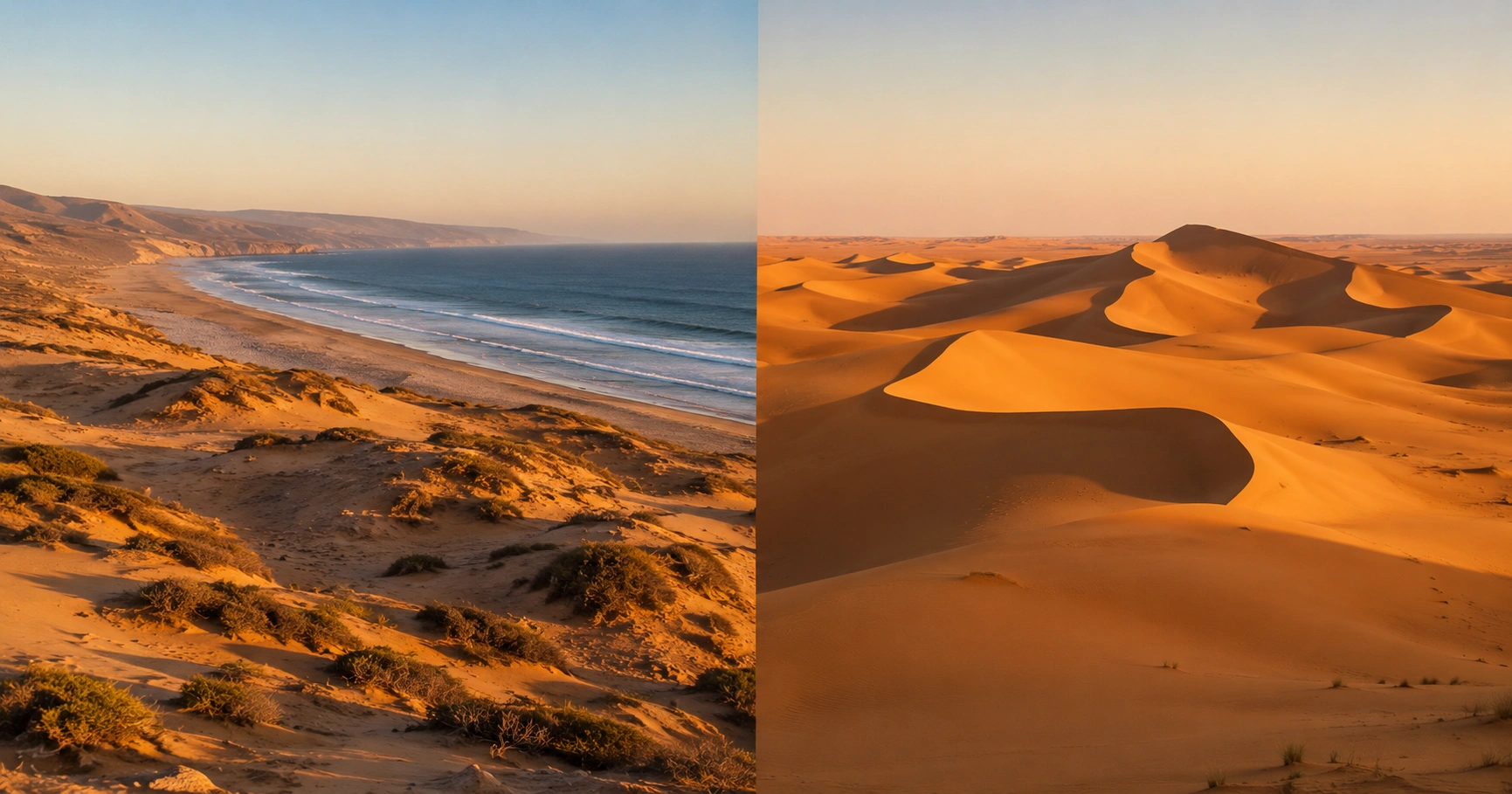
Sandboarding near Agadir earns its popularity honestly: it's accessible (no experience or serious fitness needed), scenic (the dunes drop toward the Atlantic, a genuinely striking setting), and short enough to fit into a half-day without derailing the rest of your trip. It isn't a deep-desert adventure, and any listing implying otherwise is overselling it. Judge it for what it actually is — a fun, low-effort coastal dune activity — and it holds up well. Judge it against expectations set by Sahara-tourism marketing photos, and you'll be disappointed regardless of which operator you book.
Agadir Dunes vs. the Real Sahara (Merzouga)
This comparison gets asked constantly and answered honestly almost nowhere. The dunes near Agadir (commonly called Timlalin, or sometimes "Little Sahara") are coastal dunes roughly an hour from the city — accessible as a half-day trip. Merzouga's Erg Chebbi, Morocco's true Sahara dune field, sits many hours away near the Algerian border and typically requires a multi-day trip. The dune scale is different too — Merzouga's ergs rise far higher and stretch much further than Agadir's coastal dunes. Neither is "better" outright; they're different trips serving different itineraries. If you're short on time or already committed to an Agadir-based stay, the local dunes are a genuinely worthwhile activity on their own terms. If a deep-Sahara overnight experience is specifically what you're after, no Agadir tour will deliver that — plan a separate Merzouga trip instead. For the full breakdown of naming and location specifics, see our Little Sahara Agadir guide.
What a Typical Day Actually Looks Like
Most tours follow a version of this shape, regardless of operator: hotel pickup in Agadir or Taghazout, a coastal drive of roughly 45-90 minutes north, arrival at the dunes for a safety and technique briefing, around an hour to ninety minutes of actual riding time (spread across multiple runs, since the climb back up between each one is what takes the time), a break for traditional mint tea, and the return drive. Total time door-to-door usually runs 4-6 hours. If you want the fully detailed hour-by-hour version, including morning and sunset variants side by side, see our complete itinerary guide.
Technique Basics: Standing vs. Sitting
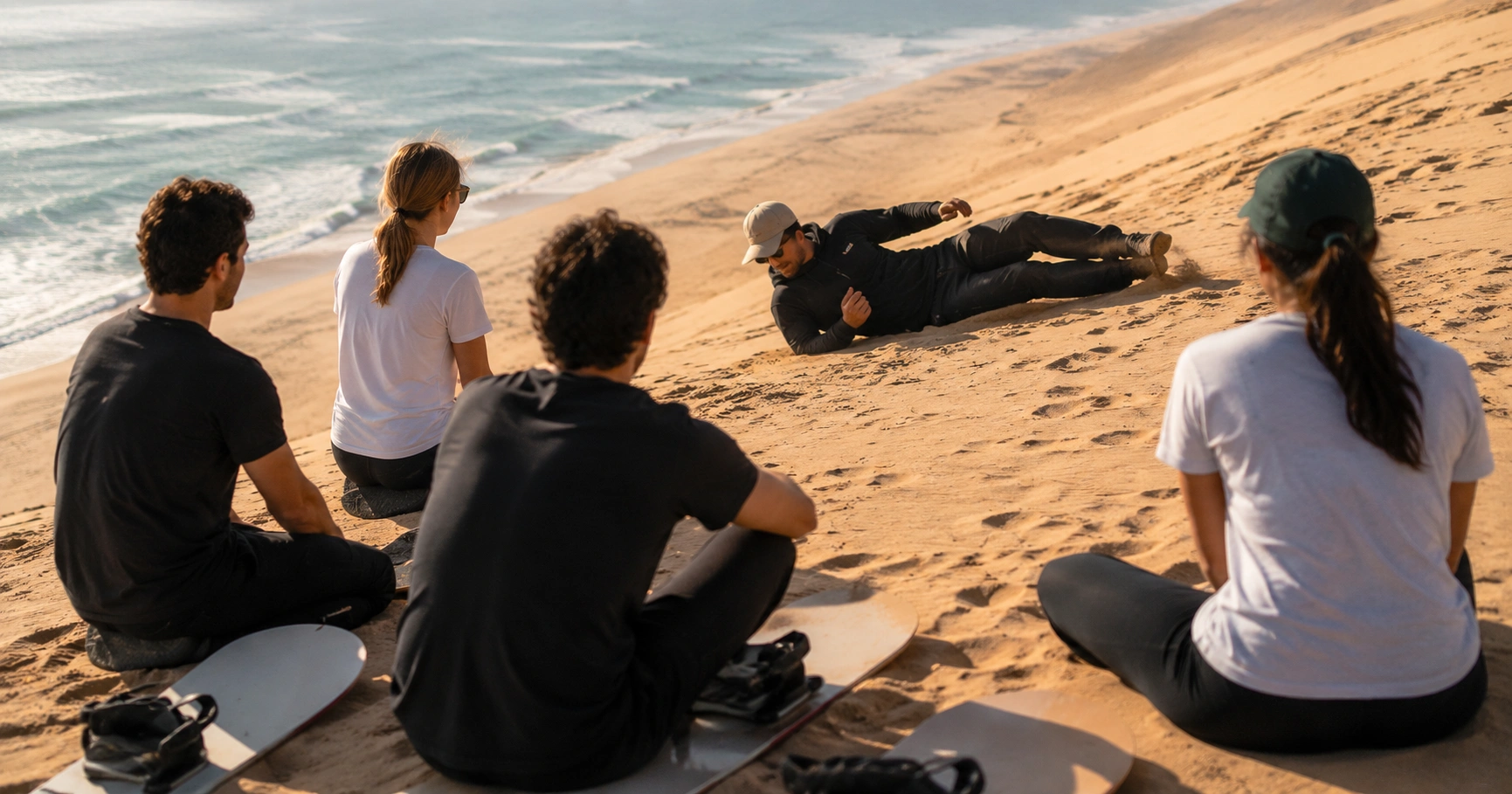
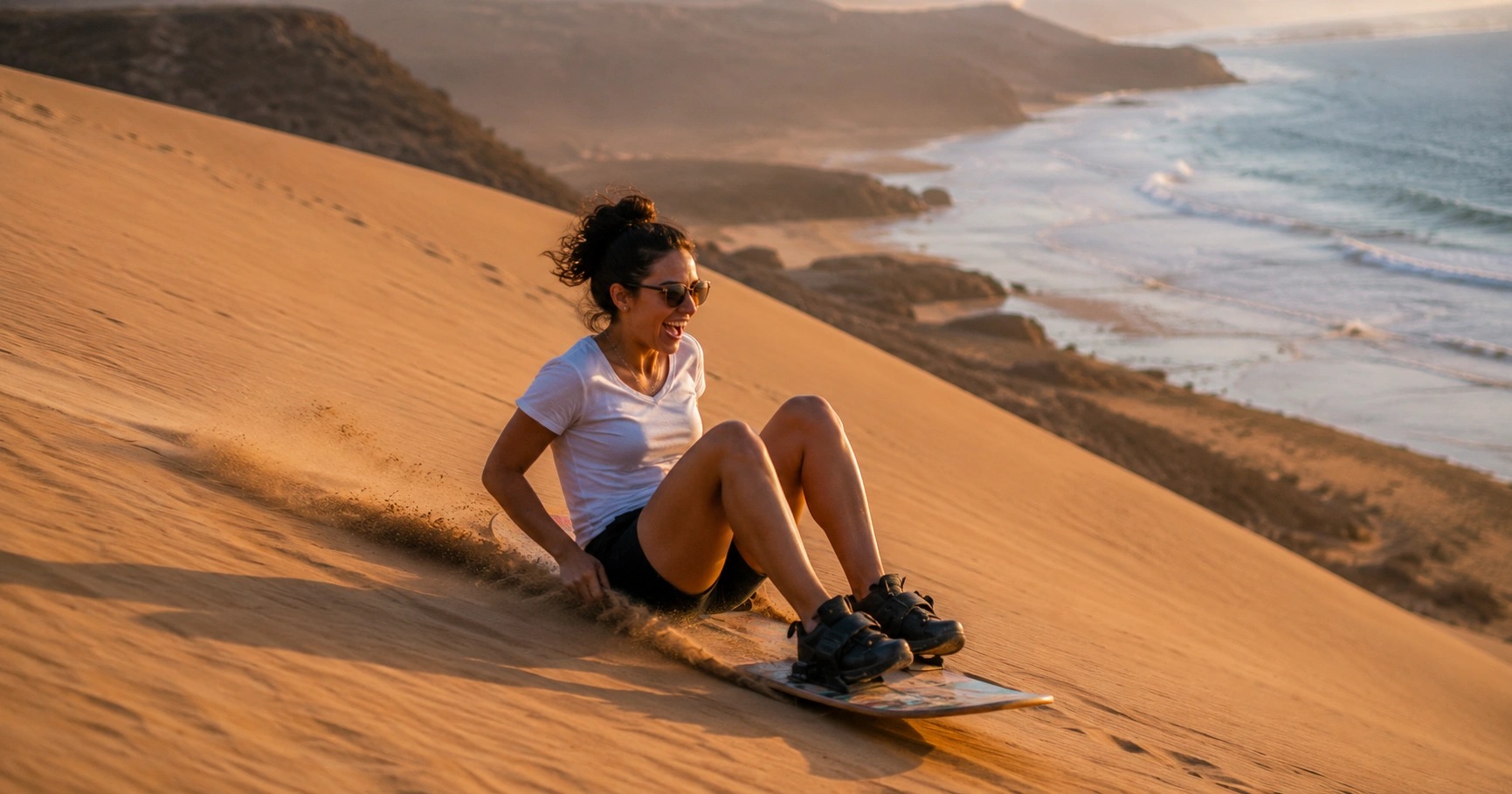
Most operators teach two basic positions. Sitting is the easier starting point — lower center of gravity, less to balance, and a gentler way to get a feel for how the board responds to the sand. Standing, closer to snowboarding, takes more balance and a bit more nerve, but gives you more control and a faster descent once you're comfortable. Nearly everyone starts sitting and works up to standing within the same session if they want to; there's no requirement to progress, and plenty of people have a genuinely good time staying seated the whole way through. The one piece of technique advice worth remembering regardless of position: if you feel yourself losing balance, let yourself fall onto your side and roll rather than bracing with a straight arm — that single habit is the difference between a laugh and a wrist sprain.
Morning vs. Sunset: Which Timing to Choose
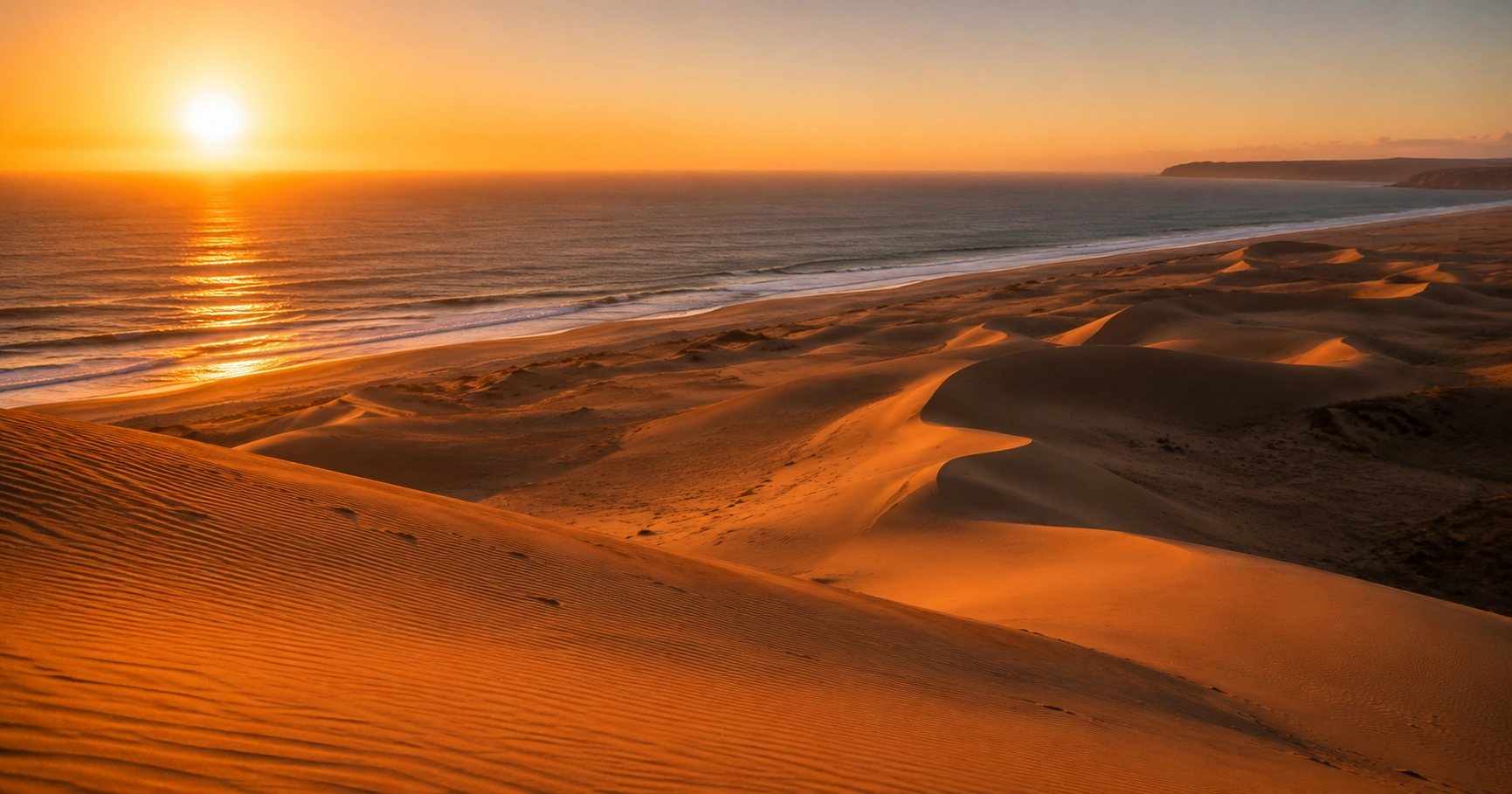
This matters more than most listings let on. Morning sessions are cooler, quieter, and give flat, even light — fine for casual photos but not dramatic. Sunset sessions trade a warmer start and a later return for genuinely striking golden-hour light, with long shadows across the dune ridges and the sun dropping toward the Atlantic behind you as you ride. If photography matters to you at all, sunset is worth the later finish. If you'd rather be back at your hotel by mid-afternoon and prioritize comfort over the photo opportunity, morning is the better call. Neither is objectively correct — it's a genuine trade-off, not a marketing choice.
Best Season: A Month-by-Month Look
| Period | Conditions | Recommendation |
|---|---|---|
| October-April | Mild temperatures, comfortable for both the drive and the activity | Best overall window, any time of day |
| May-June, September | Warm but manageable | Good, favor morning or sunset over midday |
| July-August | Intense heat, sand surface can run significantly hotter than air temperature | Sunset strongly preferred; hydrate heavily; avoid midday entirely |
Wind is worth checking regardless of season, since it affects both comfort and dune surface conditions — see the safety guide below for how to check conditions before you go.
Who This Actually Suits
Beyond the quick summary table further down, a few groups deserve a fuller answer than "it depends."
Couples and photographers get disproportionate value from the sunset slot specifically — this is genuinely one of the better golden-hour settings in the Agadir area, dunes meeting ocean with almost no crowd competing for the shot.
Families with children generally do well here precisely because the barrier to entry is so low — no equipment expertise, no strength requirement, and children often take to the sitting position immediately. The honest caveat, repeated because it matters: minimum ages are set individually by each operator, not by any industry standard, so a five-second question before booking saves a mismatched expectation on the day.
Older travelers tend to do fine as long as they pace the climbs — the ride down is genuinely easy on the body; it's the repeated uphill walk in soft sand that adds up. A private tour with a shorter, more flexible session (see our private tour guide) is worth considering if a fixed group pace feels like the wrong fit.
Travelers with significant mobility limitations face a genuine, unresolved accessibility gap — soft sand terrain has no accessible path anywhere in this niche, and no operator currently offers an adapted alternative. This is worth stating plainly rather than glossing over: if mobility is a serious concern, discuss your specific situation directly with an operator before assuming any accommodation is possible.
| Traveler Type | Verdict |
|---|---|
| First-timers, no experience | Ideal — no skill required, most are riding within minutes |
| Families with children | Generally suitable — age minimums vary by operator, confirm directly |
| Couples / photographers | Excellent, especially at sunset |
| Older travelers | Generally fine — pace the climbs, consider a private/flexible booking |
| Travelers with significant mobility limitations | Genuinely difficult — no accessible path exists; discuss directly before booking |
Sandboarding vs. Quad Biking: Which First
If you're weighing this against quad biking rather than deciding whether to do it at all: sandboarding is lower-cost, lower-effort, and needs no experience, while quad biking is faster-paced, covers more ground, and leans harder into adrenaline than scenery. Both happen in the same general area and combine easily into one day. For a full head-to-head, see our sandboarding vs. quad biking comparison.
What It Costs
Shared half-day tours generally run €20-40 per person, rising with combos or private booking. For a full tier-by-tier breakdown and how to tell if a specific quote is fair, see our complete pricing guide.
Is It Safe? What Could Go Wrong
Genuinely, yes — for most healthy travelers. The realistic risks are minor falls, wrist strain from bracing incorrectly, and heat-related discomfort, not serious injury. Sun exposure is the risk most first-timers underestimate on an exposed dune with no shade: SPF 30+ sunscreen reapplied through the session and roughly a liter to a liter and a half of water for a half-day outing are sensible baseline amounts, adjusted upward in summer heat. We've covered the full injury mechanics, age and health considerations, and how to vet a genuinely safe operator in our dedicated safety guide.
What to Actually Pack
- Closed, sturdy shoes — not sandals or flip-flops
- SPF 30+ sunscreen, reapplied through the session
- 1-1.5 liters of water for a half-day outing, more in summer
- A phone/camera sand-protection pouch or case — dust exposure on the dunes is real
- A light layer for wind, even on warm days
Independent Guides vs. Pre-Booked Tours
Occasionally you'll be offered a sandboarding session by an informal local guide directly at or near the dunes, without a pre-booked tour. This isn't automatically unsafe, but it comes with real trade-offs: no verifiable insurance, no advance-confirmed pricing, and no accountability trail if something goes wrong. A pre-booked tour with a named operator gives you a paper trail — a confirmation, a contact, and a way to leave a review — that an ad-hoc arrangement doesn't. If you do go with an informal guide, at minimum agree the price and what's included before starting, the same way you would with any unlicensed transaction abroad.
A Note on Responsible Tourism
The Timlalin dune area sits alongside a real, working coastline — a fishing village, banana plantations, and local Berber communities whose livelihoods aren't primarily built around tourism. Basic courtesy goes a long way: stick to established paths where possible rather than cutting fresh tracks across untouched dune faces, pack out any rubbish, and treat local guides and their communities with the same respect you'd want as a visitor anywhere. None of this requires special effort — it's the same baseline consideration responsible travel anywhere asks for.
Frequently Asked Questions
Is Agadir sandboarding worth it?
Yes, generally, if you go in expecting coastal dunes rather than deep-Sahara scale — judged on its own terms, it's a genuinely enjoyable, accessible half-day activity.
Is it the same as sandboarding in the Sahara/Merzouga?
No — Agadir's dunes are coastal and much smaller in scale, reachable in about an hour, versus Merzouga's true Sahara dunes many hours away requiring a multi-day trip.
Is it safe?
Generally yes for healthy travelers — the main risks are minor falls, heat, and sun exposure rather than anything serious. See our full safety guide for detail.
What age is appropriate?
No universal minimum — it varies genuinely by operator, so confirm directly rather than assuming a standard cutoff.
How much does it cost?
Roughly €20-40 for a shared half-day tour — see our pricing guide for the full breakdown.
Should I book ahead or find a guide at the dunes?
Booking ahead with a named operator gives you a verifiable confirmation and accountability trail that an informal arrangement at the dunes doesn't.
Is it suitable for someone with limited mobility?
It's genuinely difficult — soft sand terrain has no accessible path. Discuss your specific needs directly with an operator before booking.
Sandboarding at the Timlalin Dunes, hotel pickup, verified reviews.
See the tour →See exactly what drives the price up or down before you compare operators.
Read the pricing guide →For general trip planning, Visit Morocco remains the official national tourism reference, and the NHS sun safety guidance is a solid independent reference for the heat/sun exposure precautions mentioned above.
Prices, safety guidance, and operator practices in this guide reflect research at the time of writing (2026) — always confirm current details directly with your chosen operator before booking.

AGADIR TRIP GUIDE
Related content
Interdum et malesuada fames