
Imouzzer Ida Outanane: The Village Behind Paradise Valley
Imouzzer Ida Outanane: The Village Behind Paradise Valley
The Berber mountain village people drive straight past on the way to the pools — and why it deserves its own stop
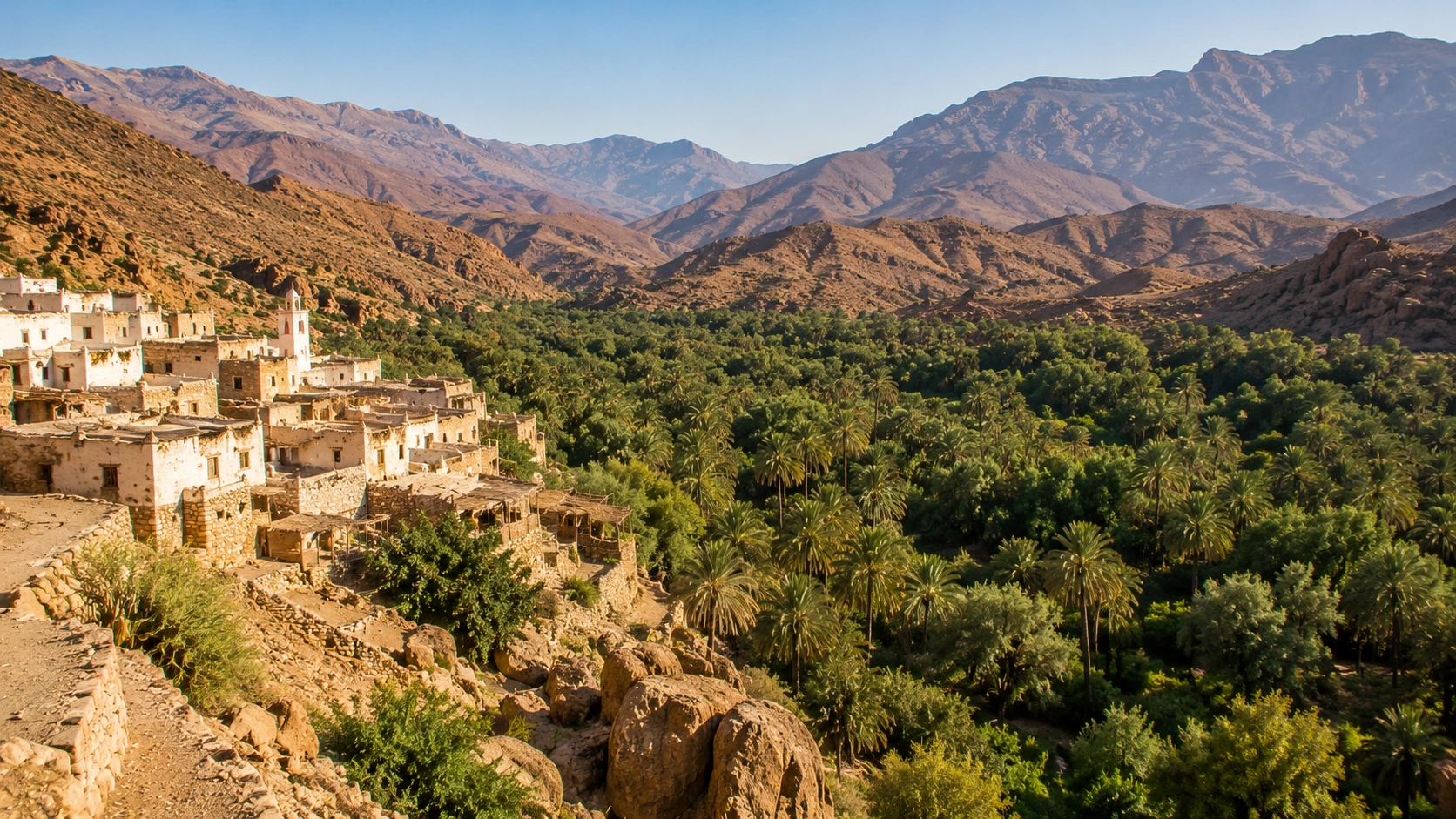
Imouzzer Ida Outanane is a Berber mountain village roughly 60 km northeast of Agadir, perched at an altitude of about 1,200-1,250 meters in the western High Atlas foothills. It's the real village most people associate loosely with "Paradise Valley," known for its Thursday souk, a regional honey-producing tradition along what's locally called the "Honey Road," and white stone houses overlooking a palm grove and seasonal waterfalls nicknamed the "bride's veil." Most visitors pass through en route to the pools without stopping — the village itself, especially on a Thursday, is worth the detour on its own.
- What Is Imouzzer Ida Outanane, Exactly?
- Imouzzer Ida Outanane Altitude and Geography
- Imouzzer Souk: Thursday Market Day
- The Honey Road and the Imouzzer Honey Festival
- The Petrified Waterfalls (The "Bride's Veil")
- A Brief History
- Getting to Imouzzer Village from Agadir
- Village Near Paradise Valley Agadir: How It Connects
- What to Actually Do in the Village
- FAQ
What Is Imouzzer Ida Outanane, Exactly?
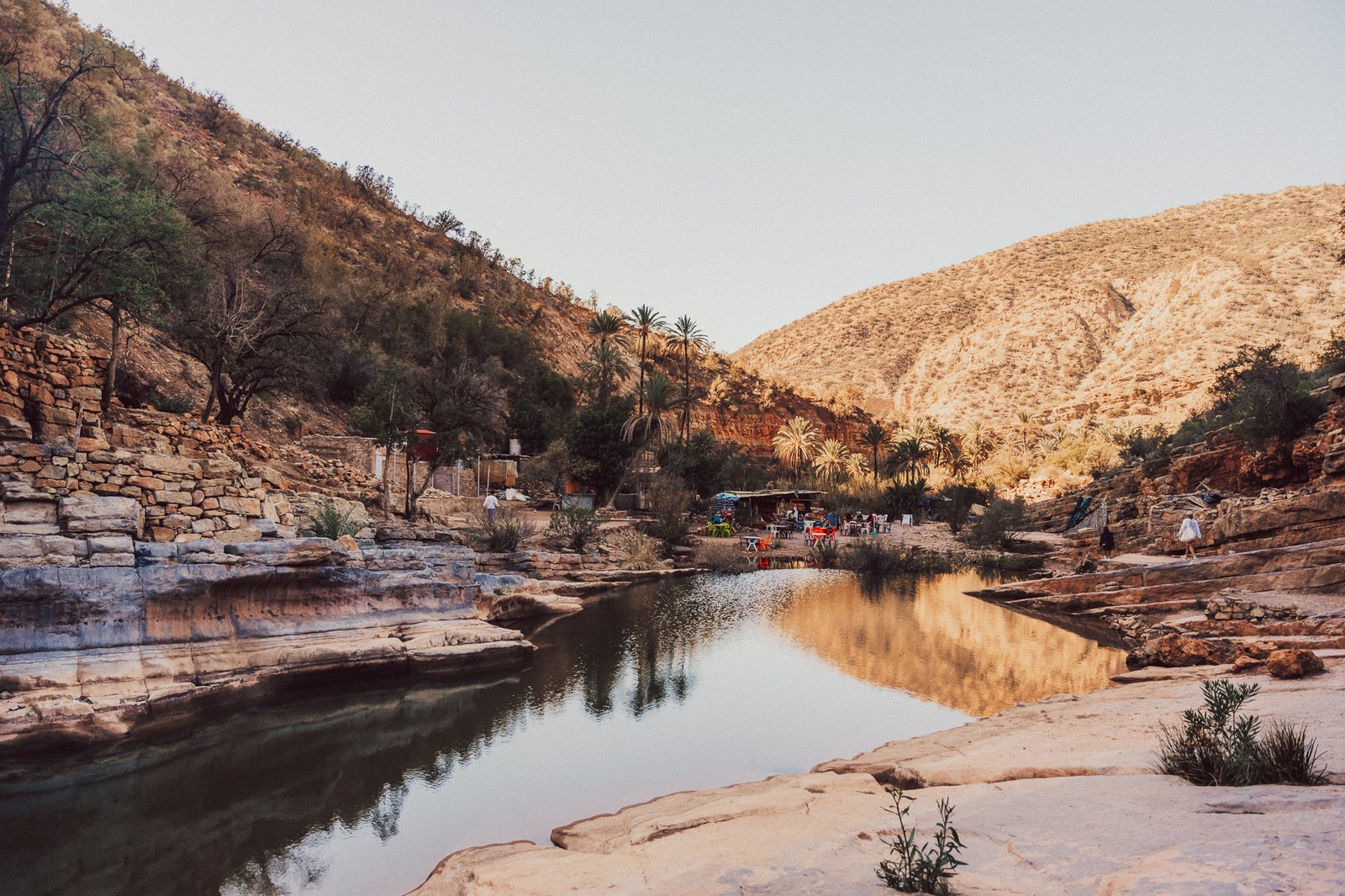
Imouzzer Ida Outanane is a rural Berber village and the administrative center of its own commune in the Souss-Massa region, named after the Ida Outanane — a confederation of Berber tribes native to this stretch of the western High Atlas. The village sits above a wide natural basin filled with palm groves, and its white stone houses with flat roofs and a single prominent mosque minaret give it a distinctly different character from coastal Agadir, despite being under two hours away. This entire limestone-plateau-and-gorge landscape carries the local nickname "vallée du paradis" — valley of paradise — which is genuinely the origin of the "Paradise Valley" name tourists know, even though the swimming pools most visitors associate with that name are really just one part of this wider area.
Imouzzer Ida Outanane Altitude and Geography
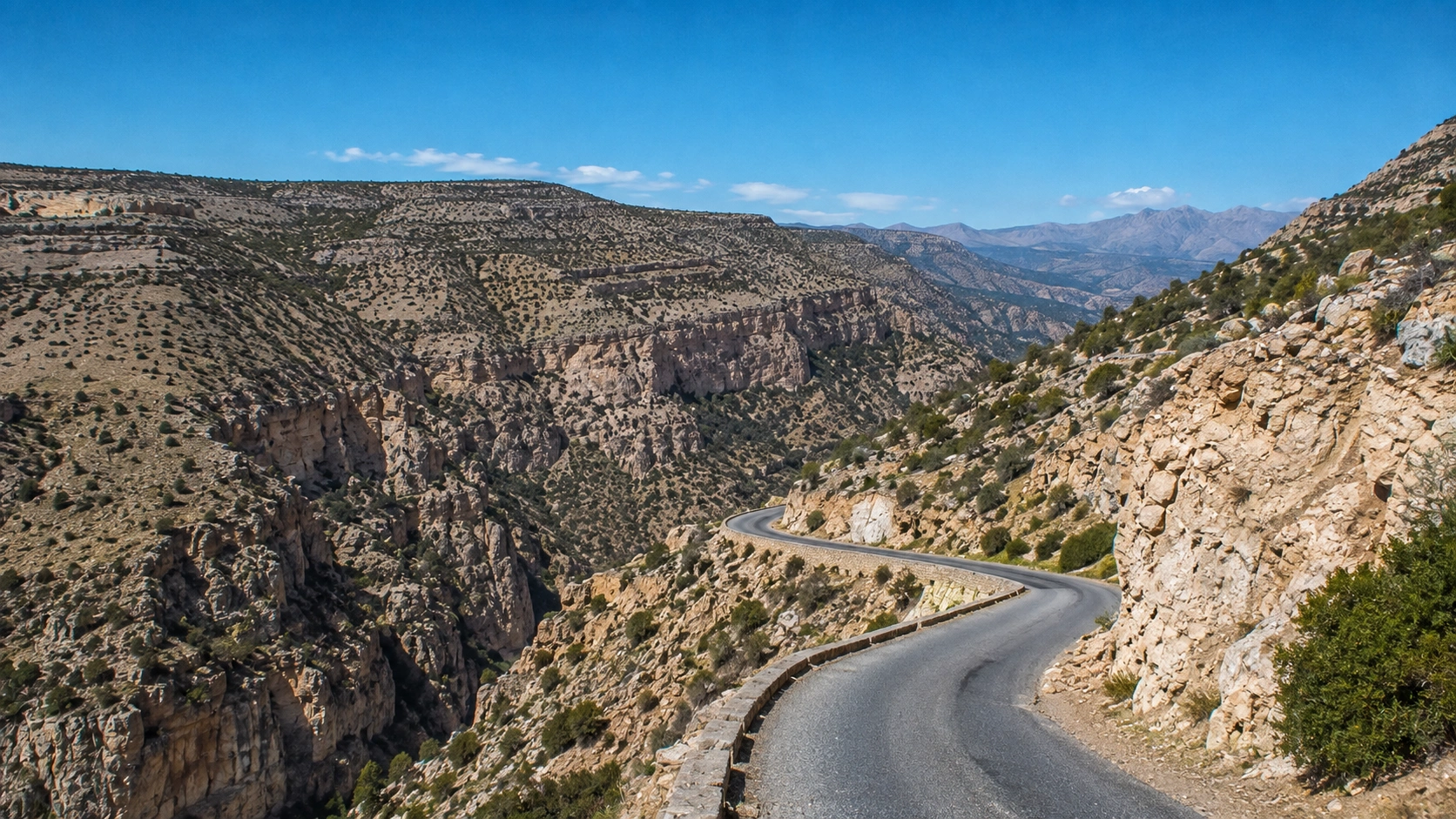
The village sits at approximately 1,200 to 1,250 meters above sea level — this figure is remarkably consistent across independent sources, more so than most facts about this region. That elevation is exactly why Imouzzer feels noticeably cooler and greener than Agadir even on a short day trip: the surrounding terrain is high limestone plateau cut through with gorges and varied vegetation, part of the western edge of the High Atlas range where it descends toward the Atlantic near Cap Ghir.
Imouzzer Souk: Thursday Market Day
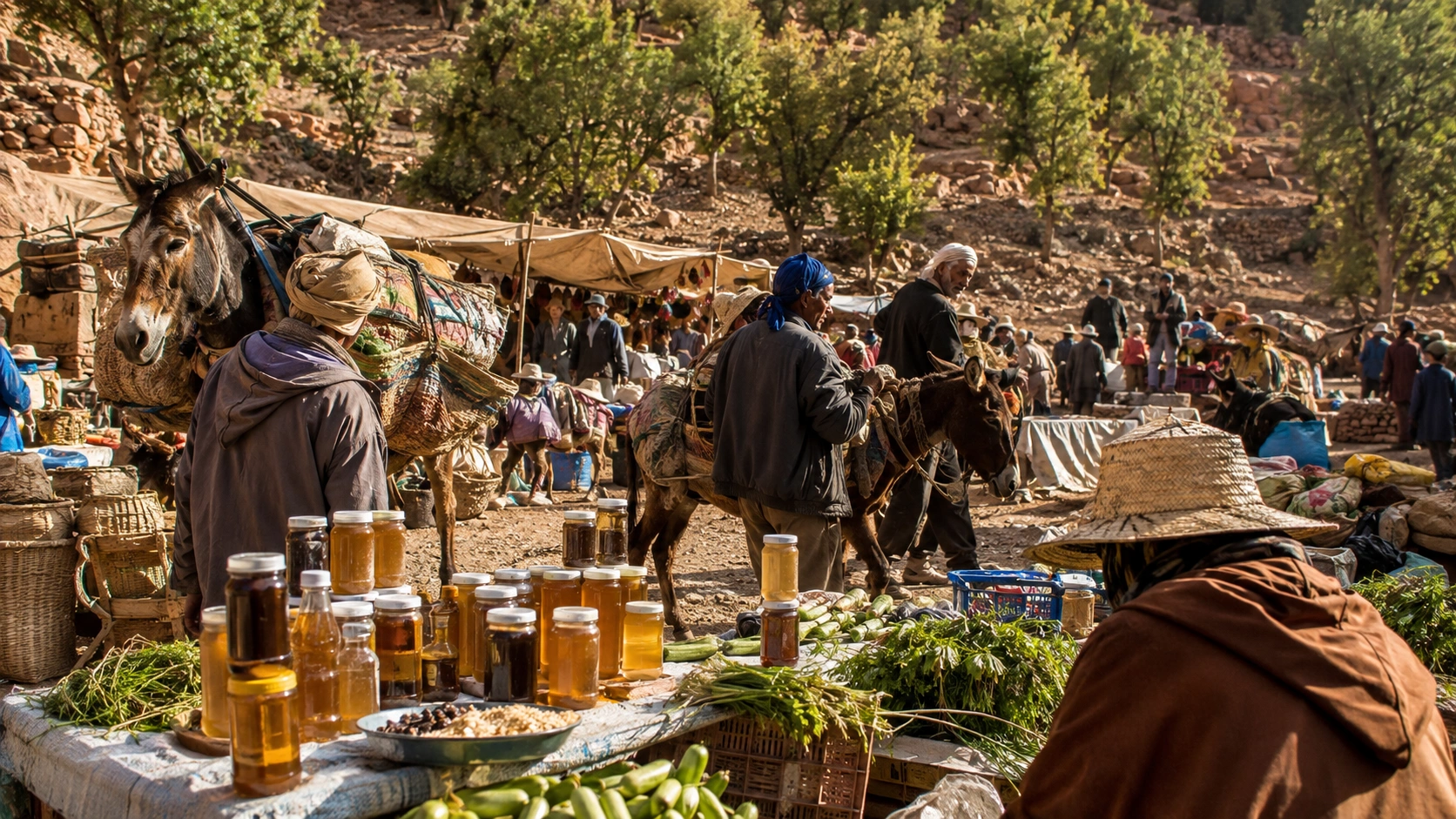
Every single independent source researching this village agrees on one thing without exception: Thursday is the day to visit. The weekly souk transforms an otherwise quiet mountain village into a genuinely lively hub, with donkeys and mules — still a real, working local transport method here — lining the approach as vendors set up. This is where you'll find the region's honey, amlou (a local blend of honey, argan oil, and almonds), and other regional produce and crafts sold directly by local producers rather than in a tourist-oriented shop. If your visit doesn't fall on a Thursday, the village is still worth seeing, but you'll be missing the single most distinctive thing about it.
The Honey Road and the Imouzzer Honey Festival
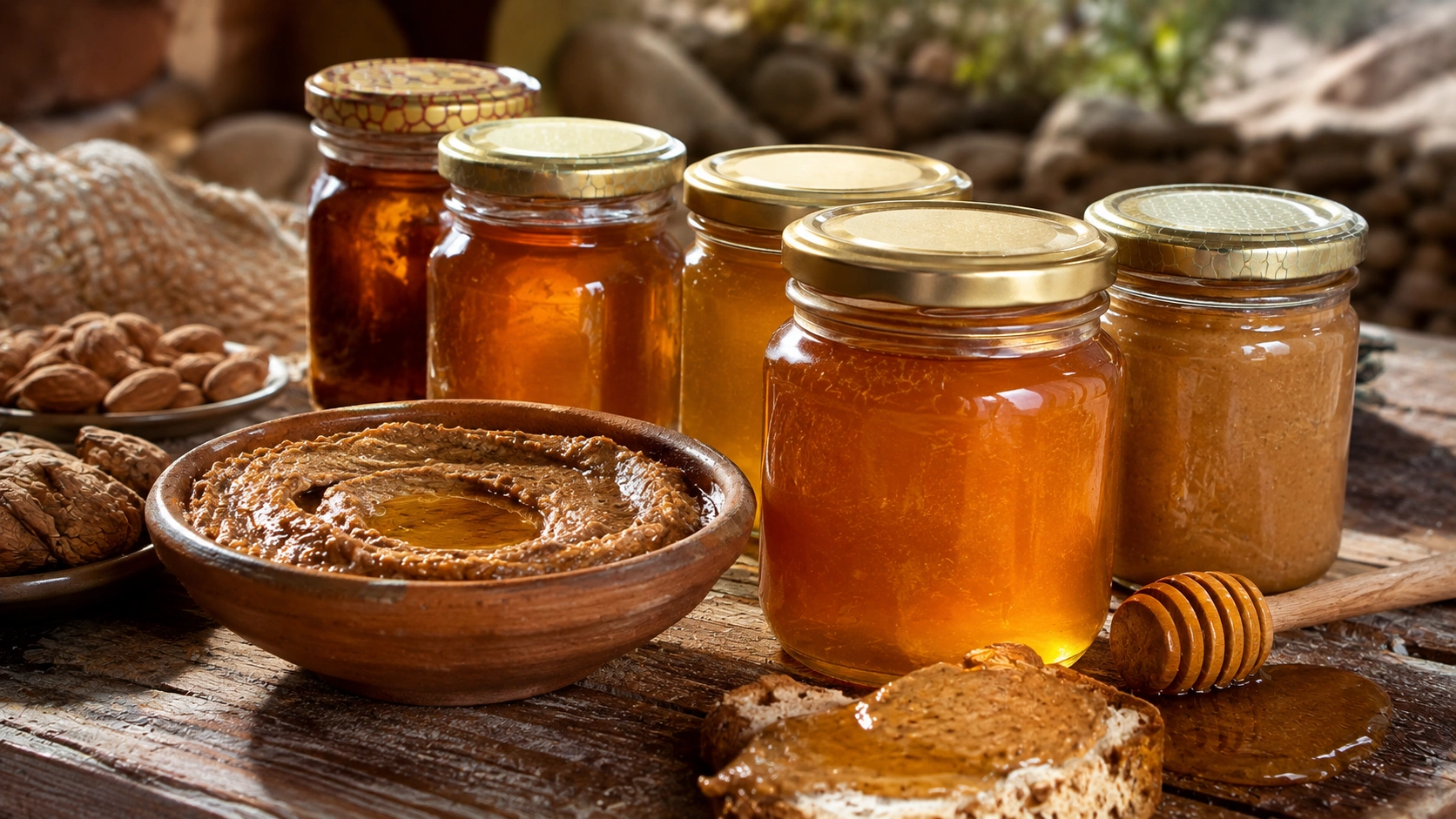
This region is sometimes called the "Honey Road" or "Honey Highway," and beekeeping is genuinely one of the village's main traditional livelihoods, alongside argan oil production — a cooperative sits right at the village entrance. The honey here is distinctively flavored by the local flora: wild thyme, lavender, and even cactus blossom varieties are specifically mentioned across independent sources as regional specialties. The Imouzzer honey festival — known locally as the Moussem Imouzzer des Ida Outanane — is a week-long celebration most commonly cited as taking place in August, bringing together beekeepers from the region to share and judge different honey varieties. If honey and traditional beekeeping genuinely interest you, timing a visit around the festival is a genuinely different experience from a standard day trip.
The Petrified Waterfalls (The "Bride's Veil")
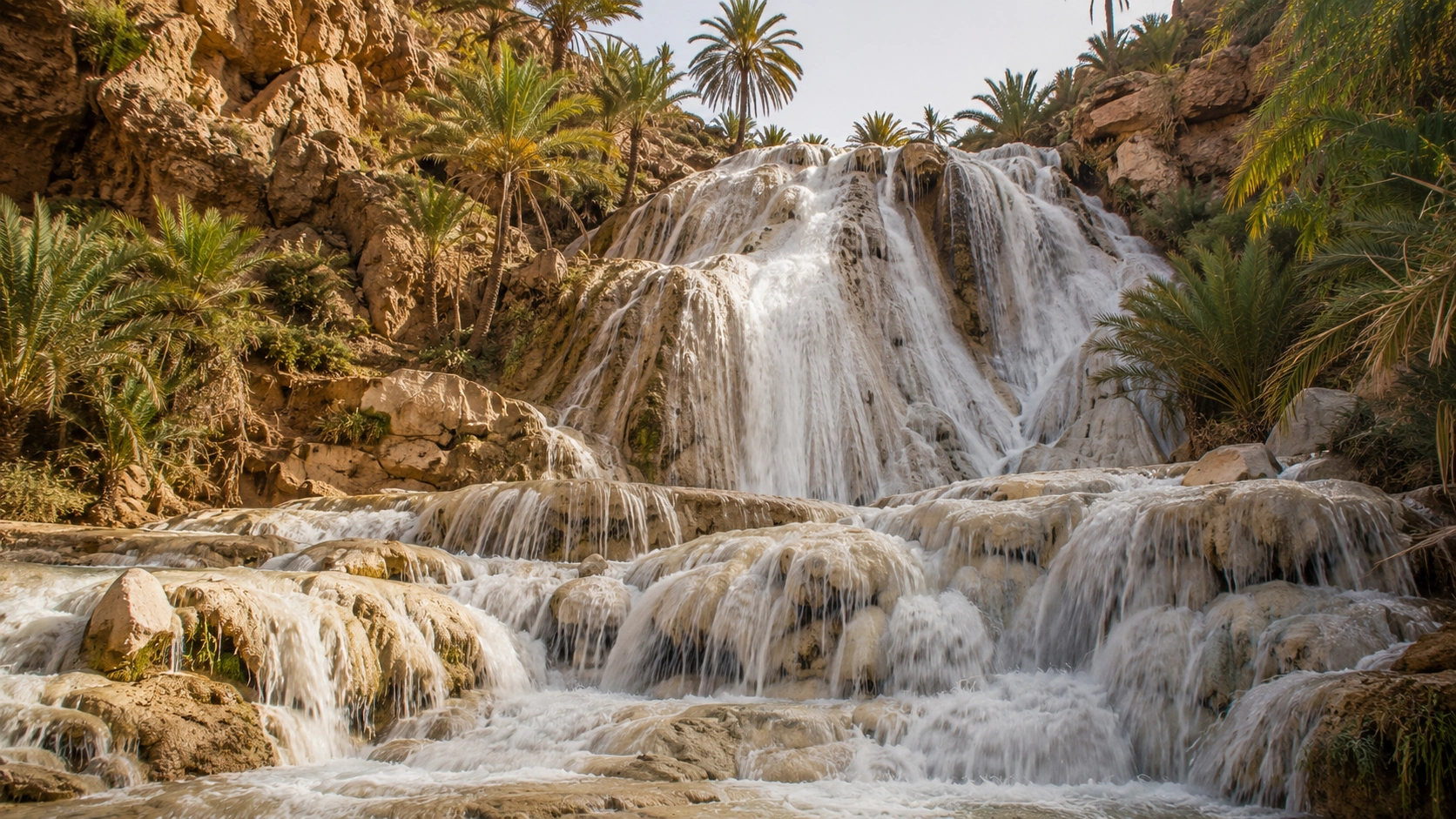
A short walk from the village — commonly described as around 4 km along a shaded path through palm, olive, and almond trees — leads to a series of waterfalls cascading over limestone-whitened rock, locally nicknamed "la voile de la mariée," the bride's veil, for the smooth white sheet the calcified deposit creates on the largest fall. These are genuinely seasonal: independent sources consistently place the reliable flow window at January through March, with the falls running low or completely dry during drier months — the same seasonal logic that governs the swimming pools most visitors come for, since this is the same watershed. The pools fed by these falls offer clear water when flowing, a natural extension of the palm-grove landscape rather than a separate attraction.
A Brief History
The Ida Outanane confederation maintained genuine independence from Morocco's central authority (the makhzen) longer than many neighboring regions, only formally coming under central and colonial administration in 1927 — a comparatively late date that reflects the area's historical remoteness and the strength of local tribal governance. That history is part of why the region still carries a distinct cultural identity, visible today in the Amazigh (Berber) language and customs still practiced in the village and surrounding hamlets, separate from the more Arabized character of coastal Agadir.
Getting to Imouzzer Village from Agadir
Most sources describe the drive as roughly 1.5-2 hours by car, along winding mountain roads that genuinely require caution and unhurried driving rather than a route to rush. Two general approaches are described across sources: heading north via the N1 toward Tamraght/Aourir and then inland, or via the P8 toward Essaouira before turning onto the CT7002 mountain road — both converge on the same general village. Guided day trips and taxis are both realistic options if you'd rather not navigate mountain roads yourself, and several tour operators specifically build 4x4 day trips branded around "the Honey Road" that combine the village, souk (on Thursdays), and waterfalls into one structured day.
Village Near Paradise Valley Agadir: How It Connects
If you've been searching for the "village near Paradise Valley Agadir," this is it — Imouzzer Ida Outanane is the real settlement behind the nickname, even though the specific swimming pools most tour listings call "Paradise Valley" sit in the palm-grove basin below the village rather than in the village itself. Understanding this connection is genuinely useful: a trip built purely around the pools misses the village, the souk, and the honey culture that gave the wider region its "valley of paradise" nickname in the first place. For the full practical guide to visiting the pools themselves — getting there, prices, safety, and best season — see our complete Paradise Valley guide.
What to Actually Do in the Village
- Visit on a Thursday if you possibly can — the souk is genuinely the defining experience of this village.
- Walk the palm grove below the village, a genuinely pleasant, shaded stroll independent of whether you continue on to the pools.
- Buy honey and amlou directly from producers at the souk or the argan oil cooperative near the village entrance, rather than from a coastal souvenir shop.
- Check the waterfalls if visiting January-March, when flow is most reliable — outside that window, don't expect much water.
- Consider timing a visit around the August honey festival if beekeeping and regional produce genuinely interest you.
Frequently Asked Questions
What is Imouzzer Ida Outanane?
A Berber mountain village roughly 60 km northeast of Agadir, the real settlement behind the "Paradise Valley" nickname, known for its Thursday souk and honey-producing tradition.
What altitude is Imouzzer Ida Outanane at?
Approximately 1,200-1,250 meters above sea level, consistently reported across independent sources.
When is the Imouzzer souk?
Every Thursday — the weekly market that transforms the village into its liveliest, most distinctive version of itself.
When is the Imouzzer honey festival?
Most commonly cited as taking place in August, as a week-long celebration of the region's beekeeping tradition.
Is Imouzzer the same as Paradise Valley?
Related but not identical — Imouzzer is the actual village, while "Paradise Valley" more specifically refers to the palm-grove basin and swimming pools in the depression below it. Both sit within the same wider "valley of paradise" nicknamed region.
How do I get to Imouzzer village from Agadir?
By car in roughly 1.5-2 hours via mountain roads, by guided day trip, or by taxi — see our route guide for full driving detail on reaching the pools specifically.
Are the waterfalls always flowing?
No — they're seasonal, most reliably flowing January through March, and can run low or dry outside that window depending on rainfall.
Getting there, prices, safety, and best season, all in one place.
Read the complete guide →Several local operators combine the village, souk, and waterfalls into one structured day.
Browse all activities →For general trip planning, Visit Morocco remains the official national tourism reference, and Google Maps is worth checking directly for live routing to the village before you travel.
Historical, seasonal, and cultural details in this guide are cross-checked across multiple independent sources at the time of writing (2026) — festival dates and market days can shift, so confirm current timing locally before planning a trip specifically around the souk or honey festival.

AGADIR TRIP GUIDE
Related content
Interdum et malesuada fames